Showing posts with label food. Show all posts

Thursday, June 6, 2019

LE MARCHE BEACHES AT ITS BEST

If you’re traveling to this region in Italy, you cannot miss the lovely Le Marche beaches. Le Marche beaches in general are lovely but be sure the weather permits sunbathing.
Long stretches of soft sand mingling with patches of gravel or rock beaches make for an interesting coastline.
Butting right up against the Adriatic, this seaside is one you must experience at least once in a lifetime.
We’ve compiled a list of the best Le Marche beaches, mainly focusing on the Conero which has the most beautiful beaches to choose from.

Due Sorelle Beach

“Due Sorelle” literally meaning two sisters, names this unique spot. Two twin rocks marks the beach, hence the name.
The beach is characterized by its crystal clear waters, smooth pebbles, and soft white sand. There are no businesses on the beach and it’s a very secluded area for adventurers and beach bums alike.
If you like to venture out into the sea, rent a kayak and paddle around the coast. Another main feature that this beach is known for is the turtle release, famous in another town called Numana.
This beach is the main spot on the Riviera del Conero. It’s a place for magical, romantic moments and has a great atmosphere for soaking in the sun.
It simply can’t be put into words. A daily ferry can take you here from the aforementioned town of Numana as well as Sirolo and Marcelli.
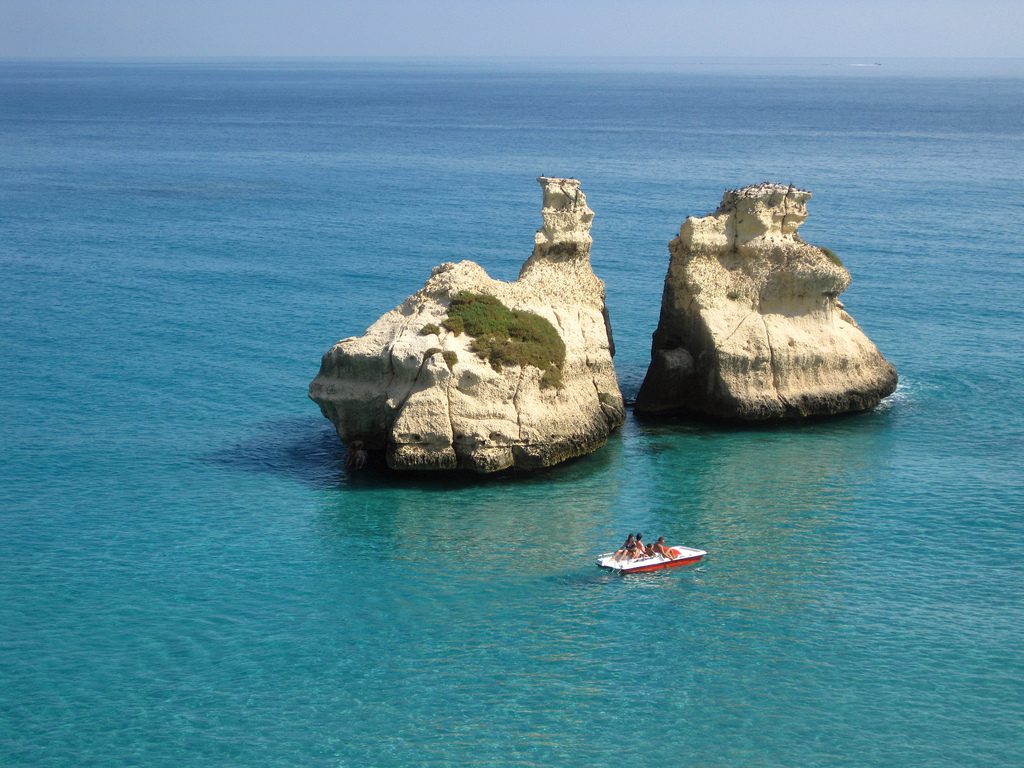
Due Sorelle Monte Conero. Le Marche beaches, Italy
Photo by Lino M at Flickr

Mezzavalle

This beach has an interesting entrance path. A tough but scenic trek to this beach will make the dip in the sea that much sweeter.
It takes around 20 minutes to reach the cove and the free beach through much of the surrounding vegetation.
There aren’t many businesses around this secluded beach. Come prepared with your own equipment. The main differentiation of this beach is the blue water.

San Michele

The path along the beach of San Michele is full of vegetation and wild life, along the slope of Monte Conero. Close by the beach, you can access restaurants and shops.
However, if you prefer to spend the day just feeling nature around you, this is a great place also. It’s easy to stay away from civilization and crowds here.
The views are incredible and near by, you can visit the Sassi Neri. This is a beach with dark sand. It’s a magical site and one that is well worth the trip!

Spiaggia della Scalaccia

This beach is somewhat of a lagoon. It’s a natural cove area starting from Osteria del Baffo di Pietralacroce. After walking for around 30 minutes you will reach the coastline.
It is more secluded and not very crowded. It’s a perfect spot for a more intimate-time-away from crowds and tourists.

Portonovo

This beach is for water-sports-lovers. It’s a great place for diving, windsurfing, and snorkeling. Additionally, there are many private beaches providing beach equipment, such as chairs, umbrellas, etc.
It’s very crowded during the holidays and weekends. Come early if you need to park or expect to find good spot on the free beach. Its pebbly beaches have characterized this beach.
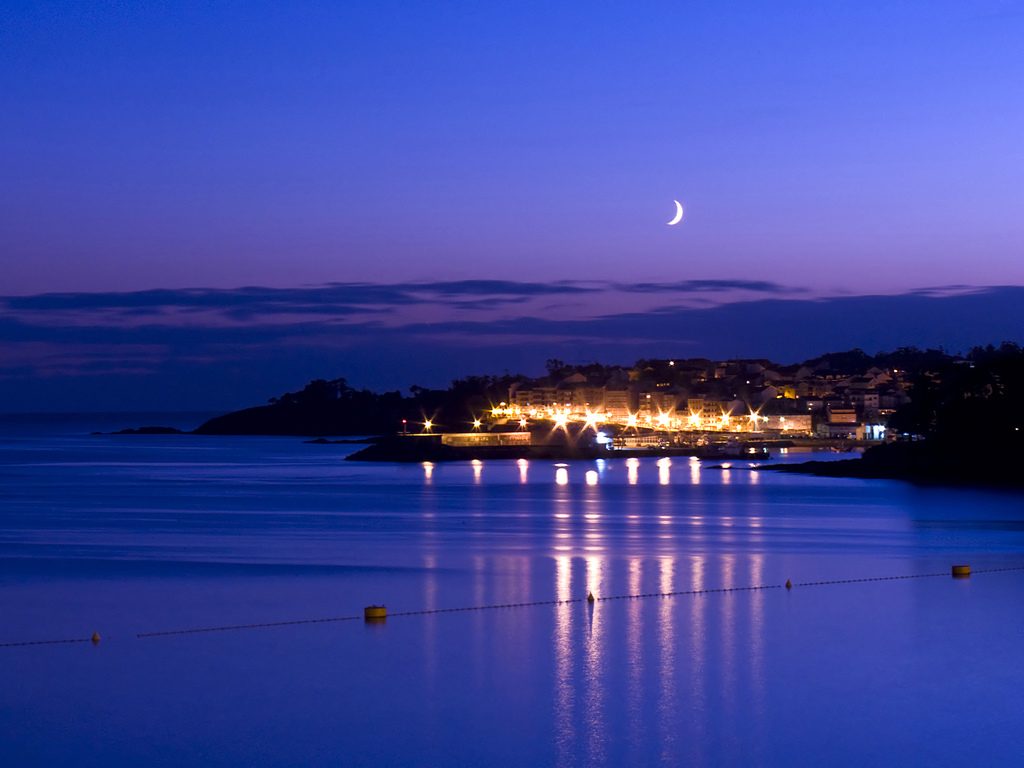
Portonovo. Le Marche beaches, Italy
Photo by Angel Torres at Flickr

Thursday, May 23, 2019

NATIONAL PARKS OF LE MARCHE

LE MARCHE NATIONAL PARKS

  • Sbillini Mountains National Park
  • Conero National Park
  • Gola Della Rossa and Frasassi Regional Park
  • Monte San Bartolo Regional Park
The region of Le Marche – or Marche – is a magical one for a number of reasons. Apart from the wine, food, kind people, etc, it’s abundant with natural beauty and national parks.
Much of the region is equipped with national parks, full of greenery, mountains, and rich views.
Here we’ve compiled a list of some of the region’s best main national parks to explore during your visit.

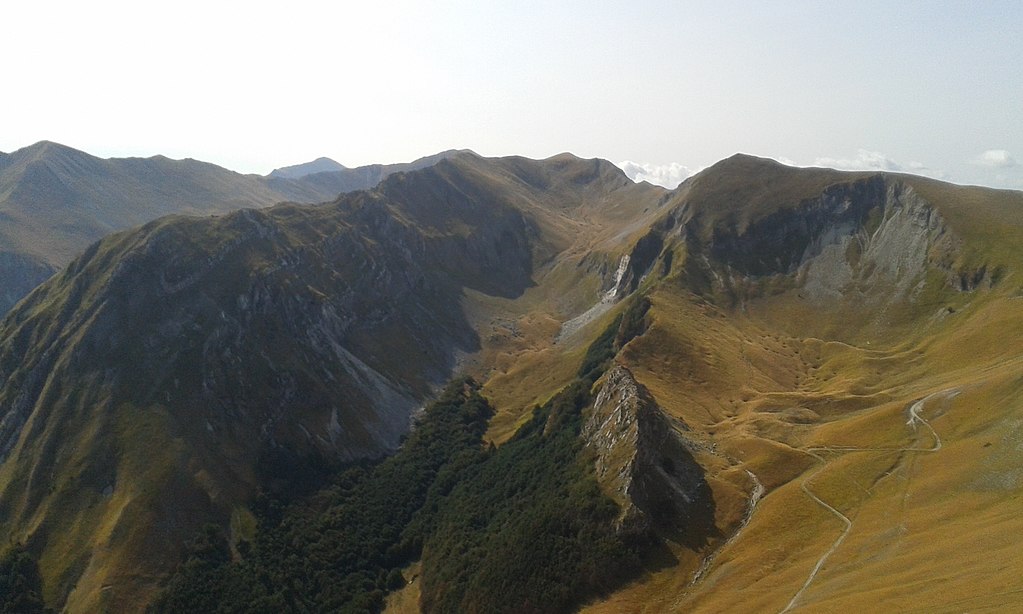
SIBILLINI MOUNTAINS NATIONAL PARK

The park covers nearly 700 square kilometers. This national park has been a sight to see since its establishment in 1993.
The park is mainly mountainous and stretches across the 4 provinces of Ascoli Piceno, Fermo, Macerata and Perugia.
These protected areas between Umbria and Le Marche consists of many different natural environments.
Mountains, rivers, streams, wooded forests, hills, and gorges fill this first mentioned of the national parks.
When exploring this spot, check out the Infernacico Gorge or mountain top sites such as Piani di Castelluccio di Norcia, il Redentore, and the Pizzo del Diavolo. The last literally means the devil’s beard.
Photo by FedeGrad at Wikimedia CommonsCCA-SA 4.0

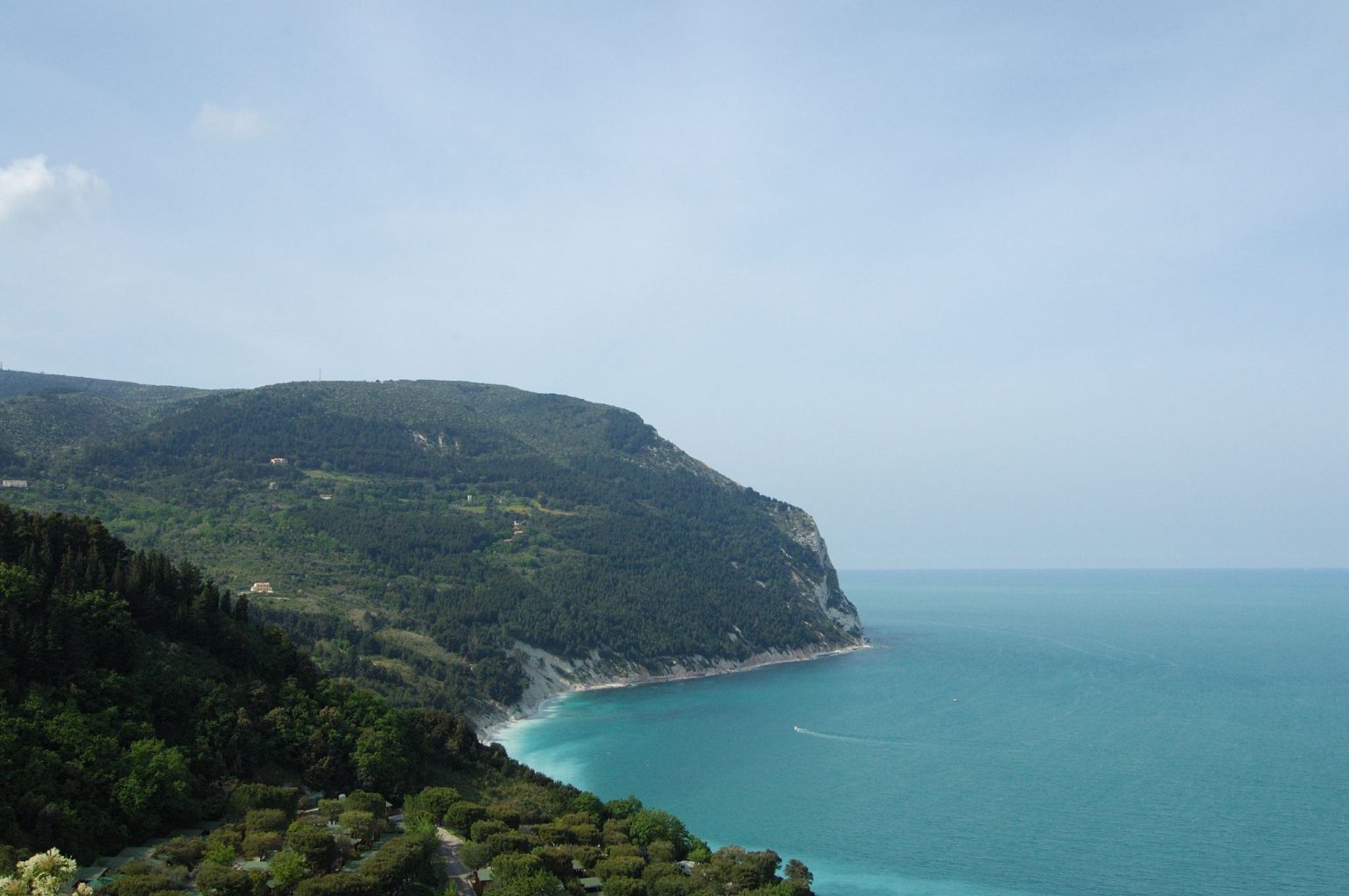
CONERO REGIONAL PARK

This park features a smaller portion of land but just as beautiful. In 1987, this 60 square kilometer park spreads over the Ancona province, through Ancona, Sirolo, Camerano, and Numana.
Monte Conero gives us the unique cliff which is far from easy to trek to. Steep paths lead the way through the Conero Regional Park with views of green countryside, hills, rocky coasts, and cities.
Photo by Francesco Gasparetti at Flickr

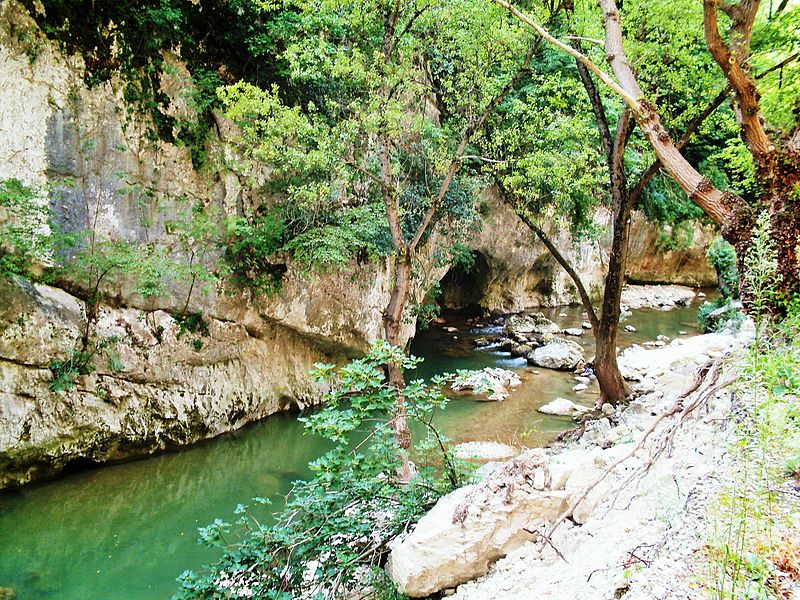
GOLA DELLA ROSSA AND FRASASSI REGIONAL PARK

On the slope of the Apennine mountains, this 90 square-kilometer park is a natural zoo of sorts. The park is said to be the most beautiful of all the protected parks in Le Marche.
The image of the hedgehog is the symbol of the park itself for their abundance in addition to royal eagles.
The municipalities of Serra San Quirico, Fabriano, Arcevia, and Genga host this natural wondrous area. If you’re visiting, be sure to check out the Grotte di Frasassi.
Photo by Claudio.stanco at Wikimedia CommonsCCA-C 3.0

MONTE SAN BARTOLO REGIONAL PARK

Moving to the Urbino and Pesaro province, this park spreads across only 15 square kilometers.
These national parks features a section of cliffs over the coast of the Adriatic. They have a magical coastline with plenty of rural inland area. The park has a fascinating and wild environment.
View of valleys, low sea levels, and wooded areas living in harmony since the beginning of its protection in 1994.
These are just a few larger main national parks. The region is equipped with plenty of smaller areas, parks such as Sasso Simone, Abbadia di Fiastra Reserve, Simoncello Park, and Cardeto Park.

Tuesday, May 21, 2019

THE GUIDE TO THE ITALIAN TRAIN SYSTEM

Italy has one of the best train systems, able to get you from one end of the country to the other in just 3 hours or so. It’s a great way to travel relaxed and is typically a pretty scenic route. If you plan to travel to major cities, the train system is much simpler than driving. Parking and rules with driving/parking in the cities can be quite expensive. While the train stations are typically in the city center, easy to navigate, and usually connected to the metro system. If you want to visit the countryside or smaller towns, driving may be a better route for you (pun-intended). However you decide to travel, the views are sure to be picturesque.
It’s really just a matter of what you’re most comfortable with, where you’re going, and how much flexibility you need in your travel plans. If you want to understand more about the train system and options, keep reading!
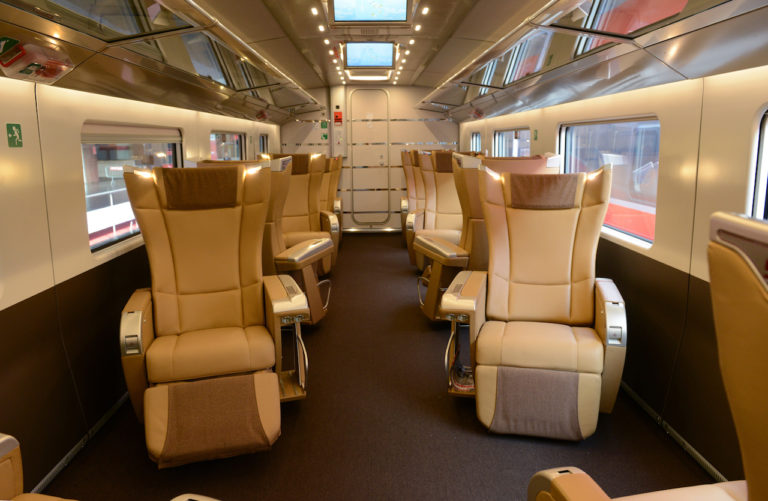
Freccia Rossa Executive *

NATIONAL AND PRIVATE TRAIN LINES
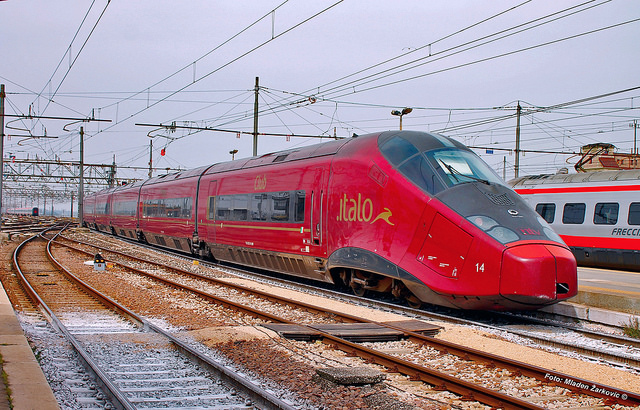
Italy’s private company, Italo, has many options connecting more major cities. They are usually more plush and newer than the regional or national train lines. There are multiple classes also so if you want to take advantage of more amenities during the ride, you have more lavish options. Some areas of the country have private companies that serve there area as well but in terms of major train systems Italo is the main private company to book through.
Italo treno, the italian private company *
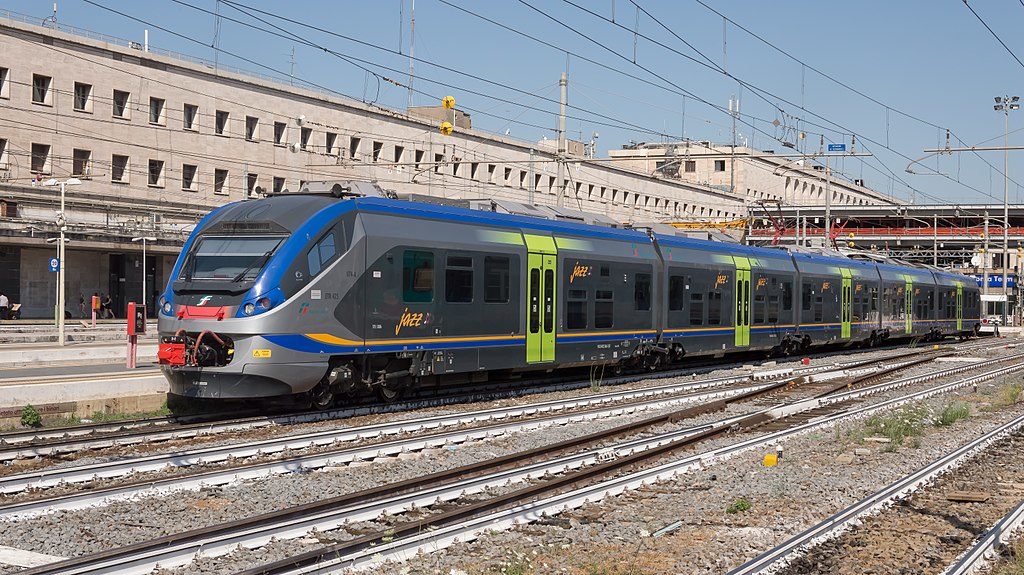
Trenitalia is the national train company of Italy. These trains basically get can get you anywhere and have normal or high-speed options. The Frecce trains are the high-speed options. On these, you will receive a seat reservation. Frecciarossa (the quickest), Fecciargento, and Frecciabianca are all fast train lines. But they are more expensive than others because they don’t stop at each station. While you can buy tickets for different classes, these trains are comfortable and tidy even in the low levels.
The Intercity and Intercity Plus train system runs the entire length of Italy. Destination stops are in every major city and large town. Again, you’ll receive a seat reservation on these trains and can choose between first and second class. First class is less crowded and the seats are a bit better. However, there isn’t astronomical differences between the two classes.
Regional
trains are your local, inexpensive option. There are no seat reservations so you are not guaranteed a spot to sit down which can be tough for a longer journey. These usually stop at each stop along the route so they take much longer than the high-speed trains. While most only offer second class, you may see some with a first class option. It’s worth spending a bit more on it if it is available because there are usually more seats and less people. But if you don’t have too far to go or don’t mind standing for a while, these are a great cheaper option!


Monday, May 13, 2019

MOST BEAUTIFUL ITALIAN PIAZZAS

Amazing Italian Piazzas

VENICE, VENETO

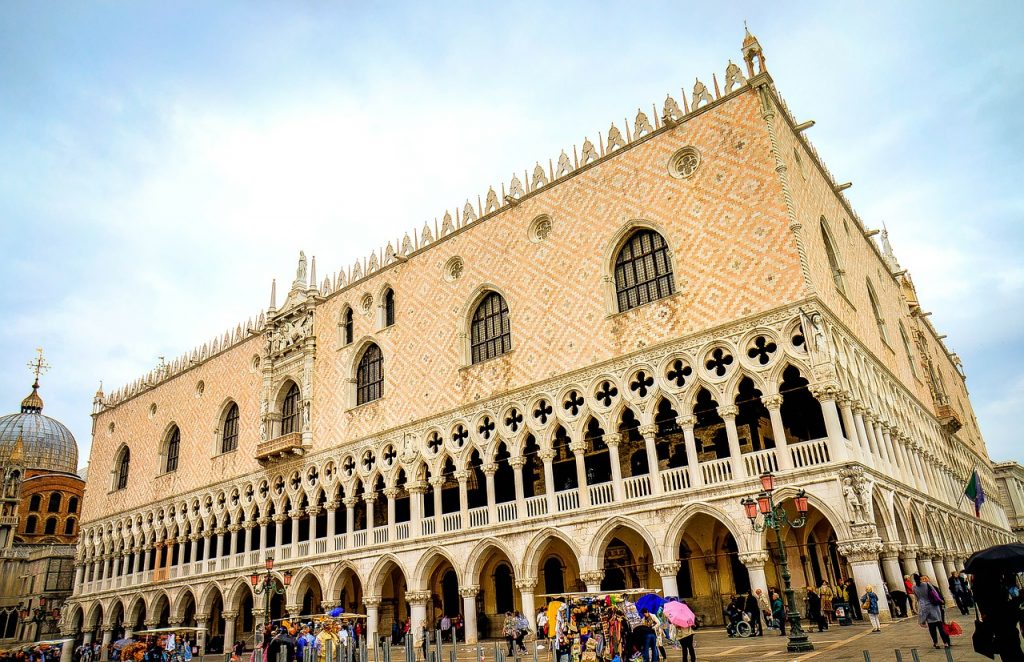
Piazza San Marco

Venice is well known for its romantic atmosphere so imagine what the main square of this romantic city can provide. Piazza San Marco offers an incredible view of the water. Also, the piers and mosaics around the town are from the Byzantine era and the square was well loved by Giacomo Casanova.
*

PADUA, VENETO

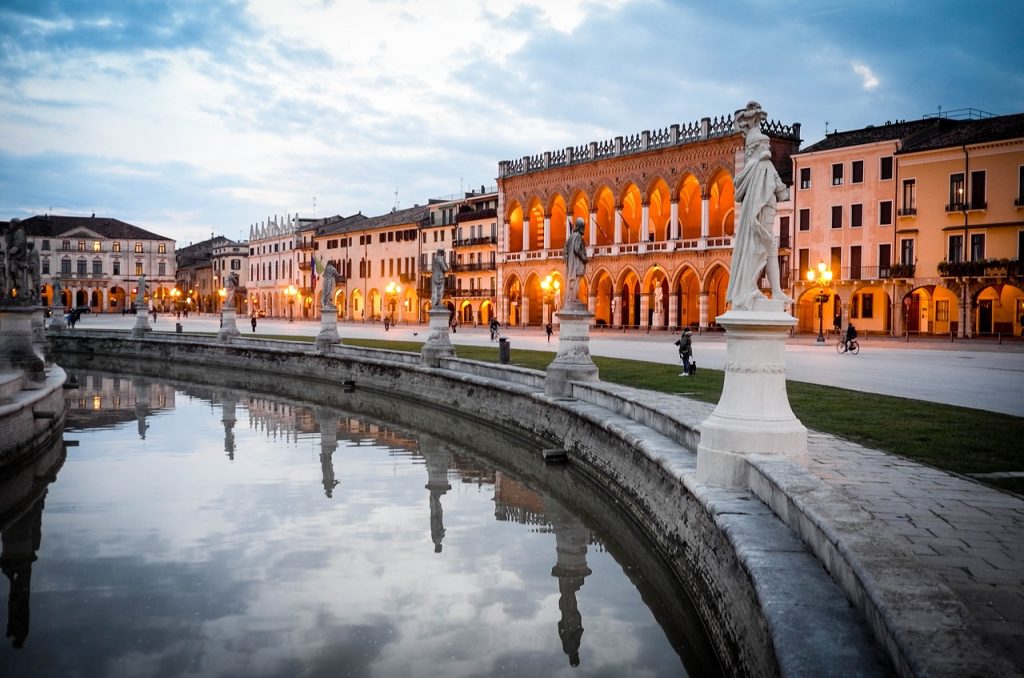
Prato della Valle

Its elliptical shape, surrounded by a narrow canal makes this square particularly unique. Additionally, Prato della Valle is not only, by far, the largest piazza in Padua but the largest in Italy! Therefore, it had to make the list of top Italian piazzas.
*

SIENA, TUSCANY

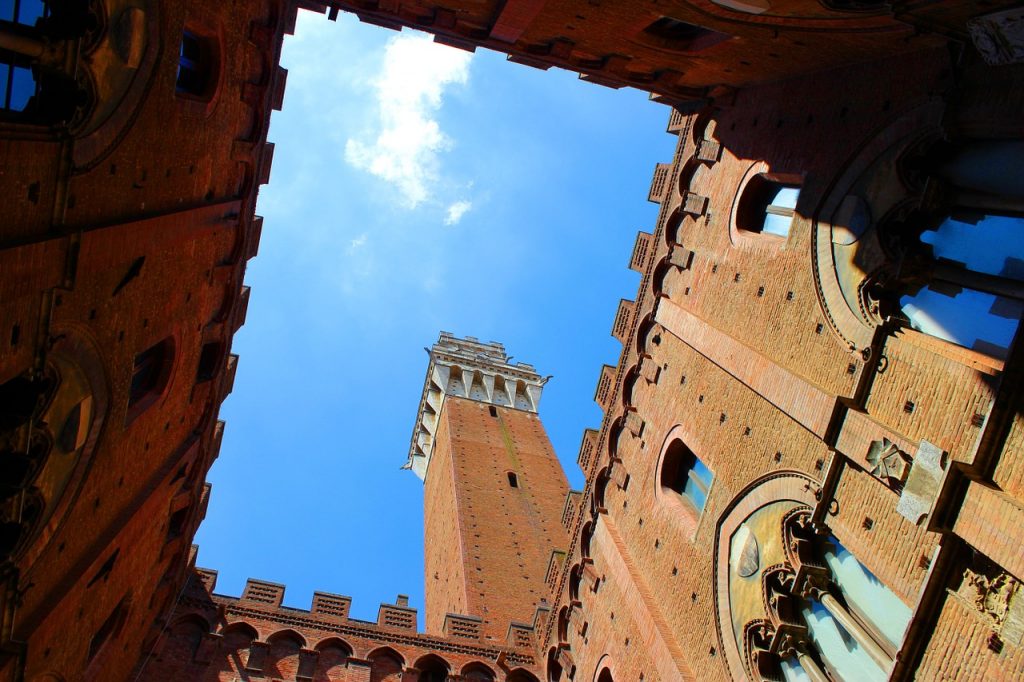
Piazza del Campo

Known for its specific shape, it’s the most original and unique of the Italian piazzas on the list. Piazza del Campo is a sacred place for the people of the city. It holds the traditions that have been present here for countless generations, mainly the Palio!
*

PISA, TUSCANY

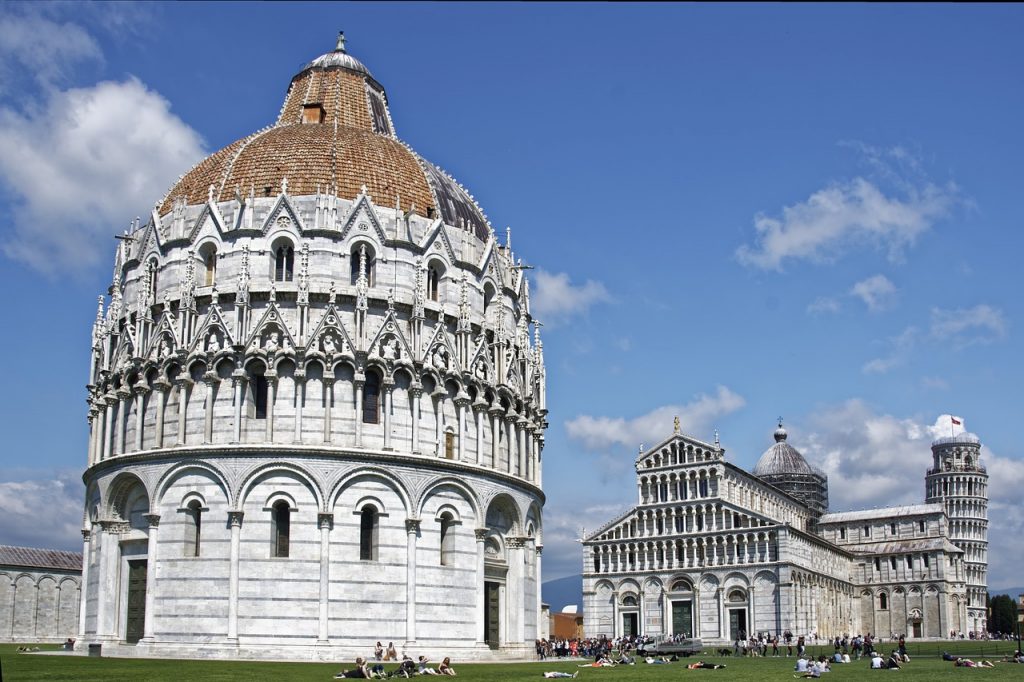
Piazza dei Miracoli

This square is included among the exclusive list of UNESCO World Heritage sites. It is also home to a religious legend that has puzzled and intimidated visitors for a very long time. On the side of the Cathedral in Piazza dei Miracoli are signs etched into the marble. These strange writings have numbers that appear to change each time you count them; they are known as the “scratches of the devil.” In this very religious town, this type of site is quite alarming and eerie to its citizens. It has many eclectic buildings and structures making it particularly unique and lovely to visit, apart from the strange devilish presence!
*

NAPLES, CAMPANIA

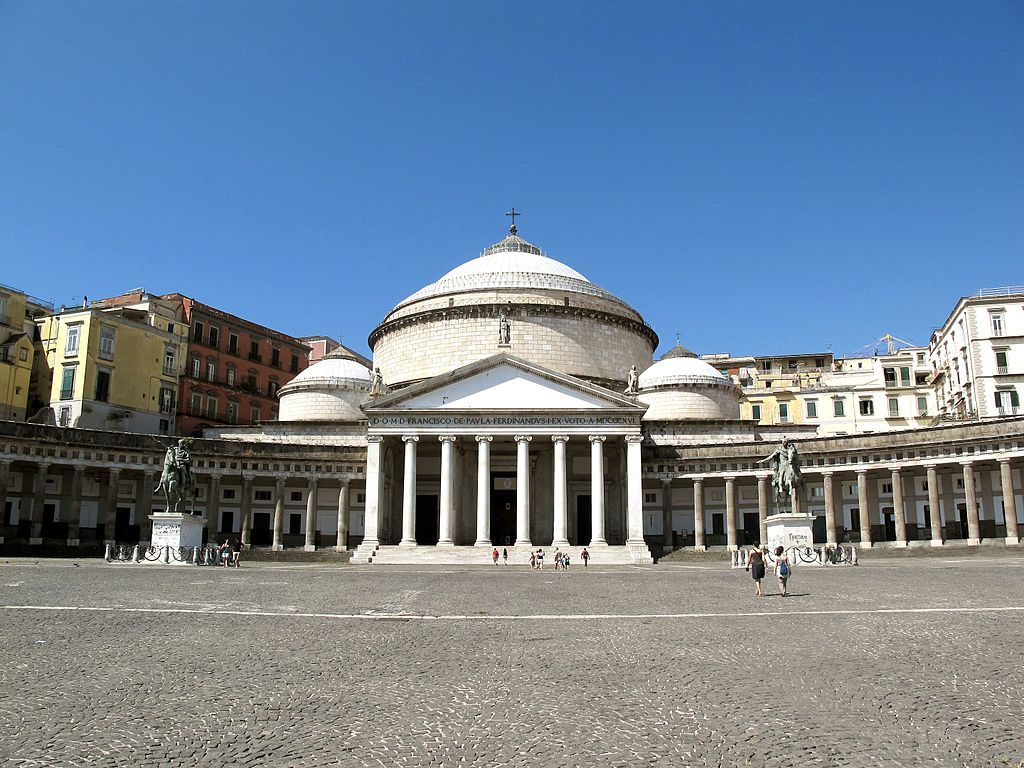
Piazza Plebiscito

Naples is your stereotypical southern Italian city. It’s busy, full of restaurants producing unparalleled pizzas, and is very Catholic focused. The Royal Palace and Basilica of San Francesco da Paola are the main highlights. The historically prominent structures add to the cultural intensity of the city and this piazza in particular. Piazza Plebiscito is very large and holds a variety of important cultural events.
*

ASCOLI PICENO, MARCHES

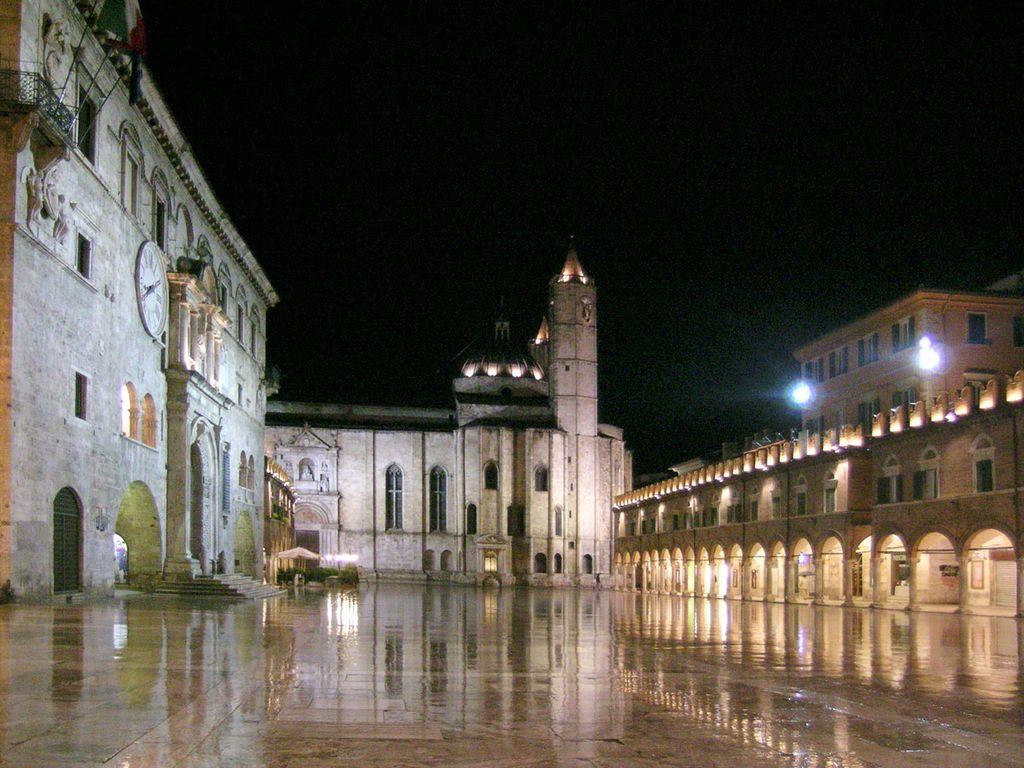
Piazza del Popolo Ascoli

To this day, this piazza is the most prominent place of meeting in the city of Ascoli. It’s largely a pedestrian area in the town center. This area is also the very heart of the historical center of the town as well. It fits within the flow of the town in the most synchronized and beautifully harmonious ways. This probably more so than any of the other Italian piazzas.
*

ROME, LAZIO

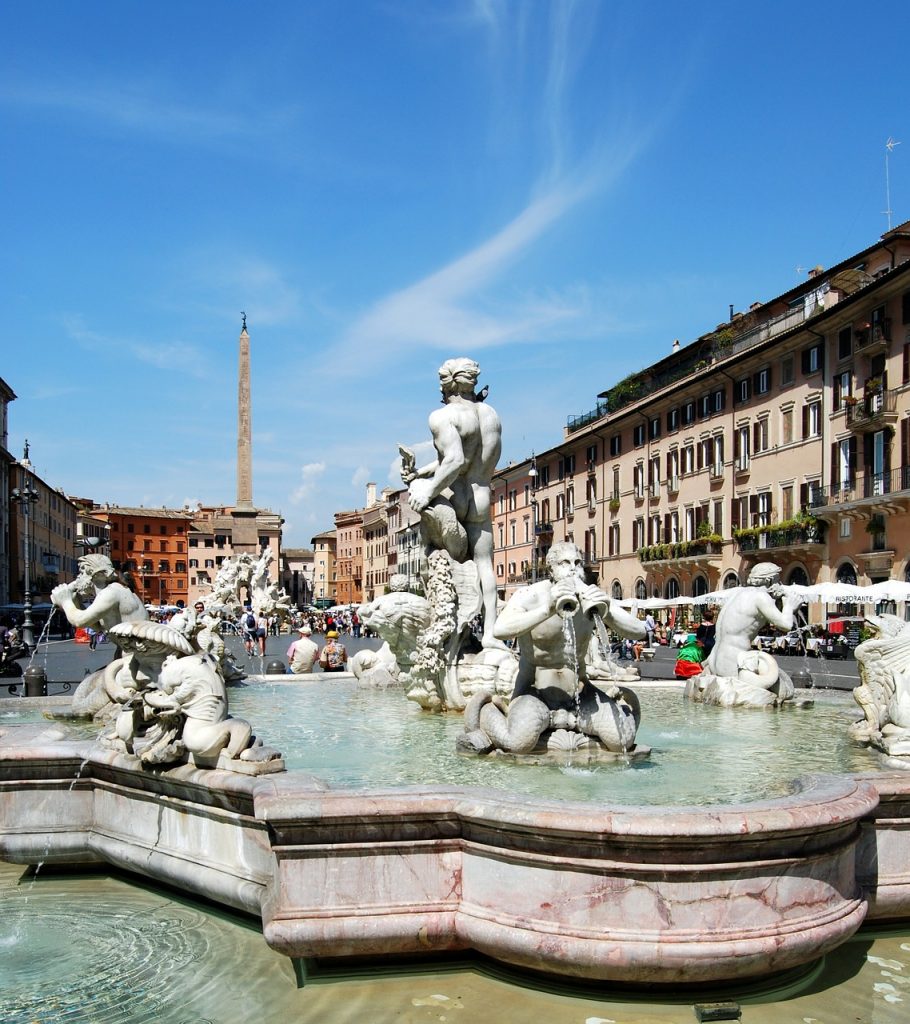
Piazza Navona

During the Epiphany every year, this piazza holds the Befana festival. Rome is very Catholic practicing city, making the religious holidays of great importance and encouraging grand festivals in relation to them. Piazza Navona is similar to the ancient stadiums and is one which holds incredible character.
*

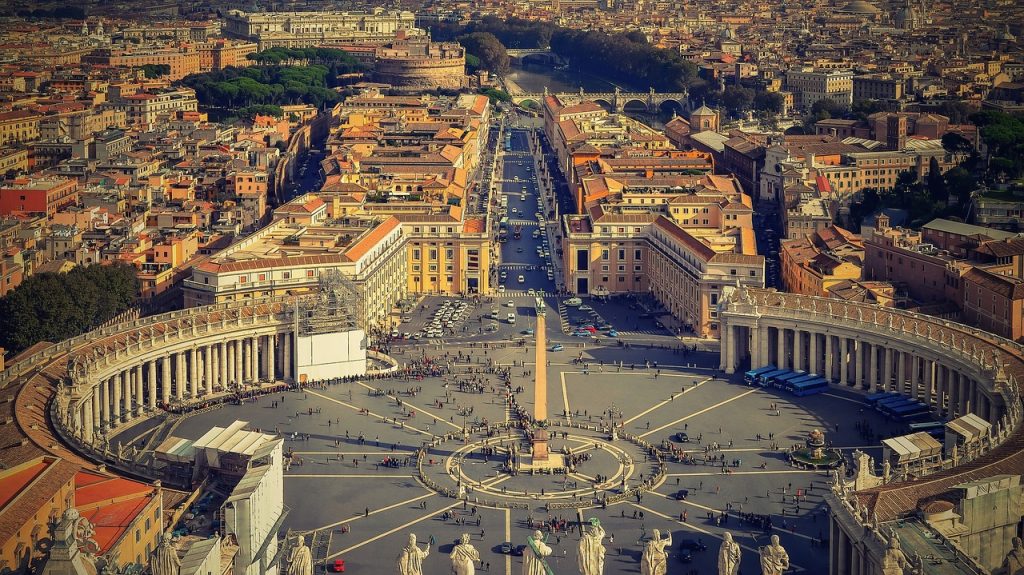
Piazza San Pietro / St. Peter’s Square

Vatican City is the only place within Italy that is technically recognized as separate from the city with which it is in. The Vatican State features the Vatican, or St. Peter’s Basilica, and the Vatican Museums. This square and its museum is one of the most visited places in the world, 6th on the list in fact. It is famous not only for its immense beauty but also as being the home of the Pope. It also holds the world famous Sistine Chapel, located within the museum. Situated in the historical center of Rome is St. Peter’s square and the Vatican State. This importance of this square is unparalleled against the rest of the Italian piazzas.
*

PALERMO, SICILY

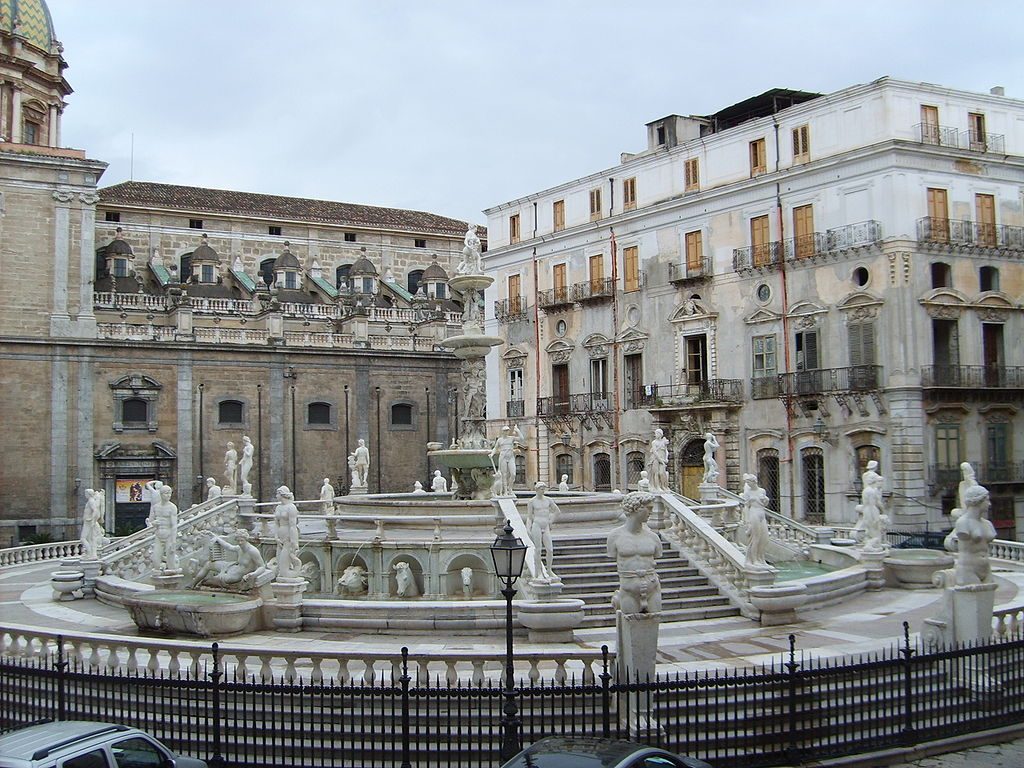
Piazza Pretoria

The capital of Sicily, Palermo, is home to the incredible Piazza Pretoria. It is also known as “Piazza della Vergogna” because of the many nude statues that build the fountain in the very center. This was originally a point of conflict for the nuns of the Santa Caterina Convent in the area looking over the square. They renamed it to communicate their displeasure with the fountain’s sculptures. The famous Francesco Camilliani constructed the fountain in 1500. This piazza is also located close to the Quattro Canti.
*

Sunday, May 12, 2019

HOW TO BRING YOUR PET TO ITALY

PETS IN ITALY

On the streets of Italian cities and towns, it is not uncommon to see dogs leave their calling cards, showing an aspect that is quite gross, for lack of a better word. Therefore, be on the lookout when you walk.
In Italy, many dogs’ owners do not proper attend to theirs dogs. For instance, they may not take them out on long walks in the countryside or give them proper open areas to run around. Instead, they only take them to small dog parks or normal local parks; some even let their dogs loose on the streets to expect that they care for themselves. However, some cities do not condone such deeds and a dog owner may be fined a sum of €30 for not cleaning up any excrement your dog has deposited on the street. Though, unfortunately, the law is not obeyed by most people. Nonetheless, any dog owner is expected to use a poop scoop to pick up the feces left by his/her dog.

QUARANTINE PROGRAMS WHEN BRINGING PETS TO ITALY

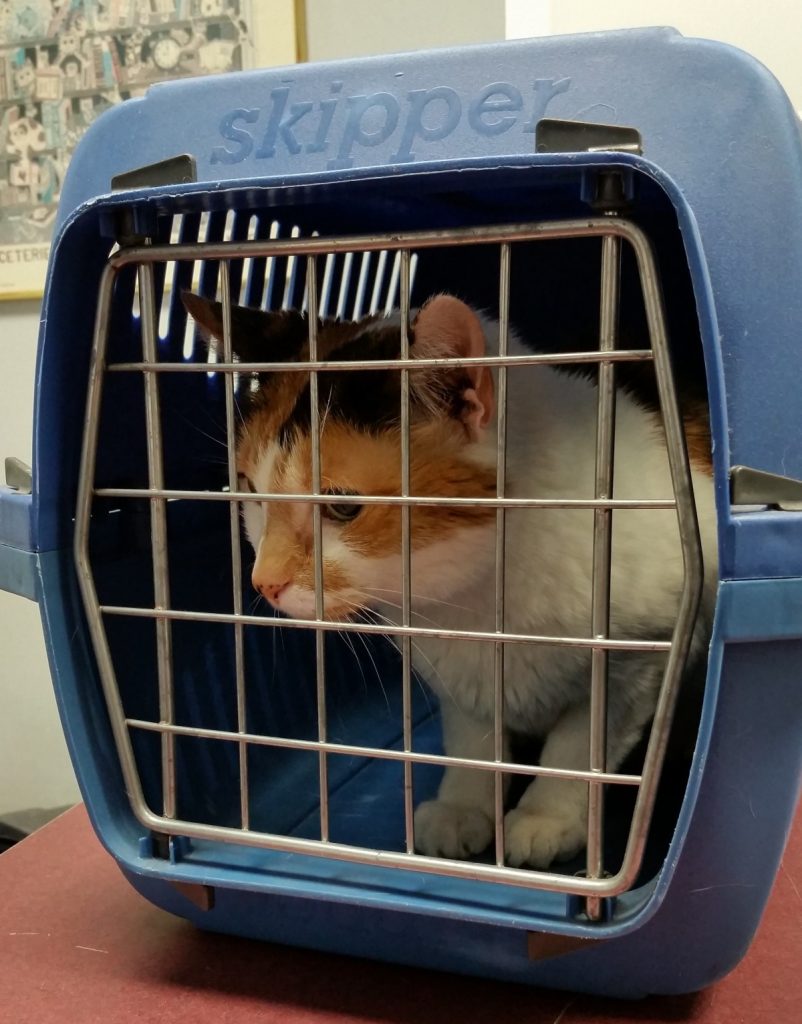
When a healthy pet is arriving Italy, no quarantine is necessary. Although, an ISO standard microchip with appropriate scanner or another equivalent and a bilingual (Italian-English) health certificate issued by an approved veterinary surgeon are required.
Also, a rabies vaccination, which is not less than 20 days or later than 11 months before the health certificate is issued is required for cats and dogs. While a cat and dog that are less than 12 weeks old may not need the rabies vaccine, a health certificate indicating that no cases of rabies have been recorded in at least 6 months in local area of the dog is a must! For dogs coming in from countries that are known for high incidence of rabies, they must present a certified rabies blood test result a month after their first vaccination and a minimum of 3 months before they arrive in Italy.

TRANSPORTATION OF PETS IN ITALY

A shipping company should be notified beforehand if you’re planning to transport a pet by ferry or boat. This is because some companies will let you transport your pet in a vehicle while some will let you transport it in a cabin. If your dog is an aggressive type and is not used to traveling, you are advised to sedate the animal during the journey.

If you wish to transport your pet via air, every airline has its own rules and regulations. Consult the airline you are traveling with to know exactly what the procedure is concerning the transportation of your pet!

PET IDENTIFICATION

When a dog gets to 3 months, it is expected that its owner register it at the local dog bureau. It is part of the Italian regulations that a registered dog be tattooed not only on its ear, but its body too, as a symbol of registration. However, due to advancement in technology, the microchip identification method is gradually effacing the tattooing method.
In Italy, dog tax has been stopped. Because many dog owners refuse to pay tax, claiming that their animals are working animals. Identification discs are not worn by cats and dogs in Italy and no system of licensing is available either. Nonetheless, dog owners are encouraged to wear collars and tags containing the dog’s name, phone number and address on it.

If a lost dog is found, it is taken to local pound. And if not claimed by an owner, the dog may be put down. But If dogs are to be taken on a public transport, it should wear a muzzle. Also a leash must be attached to it. Also, If you will not be carrying a dog on a public transport, then, you must pay full fare for its transportation. If your dog is too big, it may not be allowed that you travel with it on a public transport.
Vaccinations of Pets and Native Diseases in Italy

VACCINATIONS REQUIRED

For cats, the vaccines required include Calicivirus, Panleukopenia (FVRCP), Feline Viral Rhinotracheitis and rabies in a minimum of 4 weeks before arriving Italy or in the last 12 months.
For dogs, the vaccines required are: Hepatitis, Distemper, Leptospirosis, Parvo, (DHLPP) and rabies in a minimum of 4 weeks before arriving Italy or in the last 12 months.

Pets in Italy face a number of dangers and diseases, which are not common in other European countries. These diseases include what is known as sandfly disease or Mediterranean. This disease is incurable once contacted. The best shot is to prevent the disease by reducing the time a dog uses outside the house during afternoon scorching sun . Or the time a dog spends outdoor at night. Meet with a veterinary surgeon to ask for other preventive measures that can be taken.

WELFARE AND INSURANCE

Ente Nazionale Per La Protezione Degli Animali is responsible for animal welfare in Italy. It is responsible for sheltering abused animals and animals that have gone astray. It also runs economical and affordable pet hospitals in a number of cities in Italy.
A dog may die after eating food that has been poisoned. Which may have been laid down to control predators by hunters. So, take very good care of your dog when taking it on a walk in rural areas.
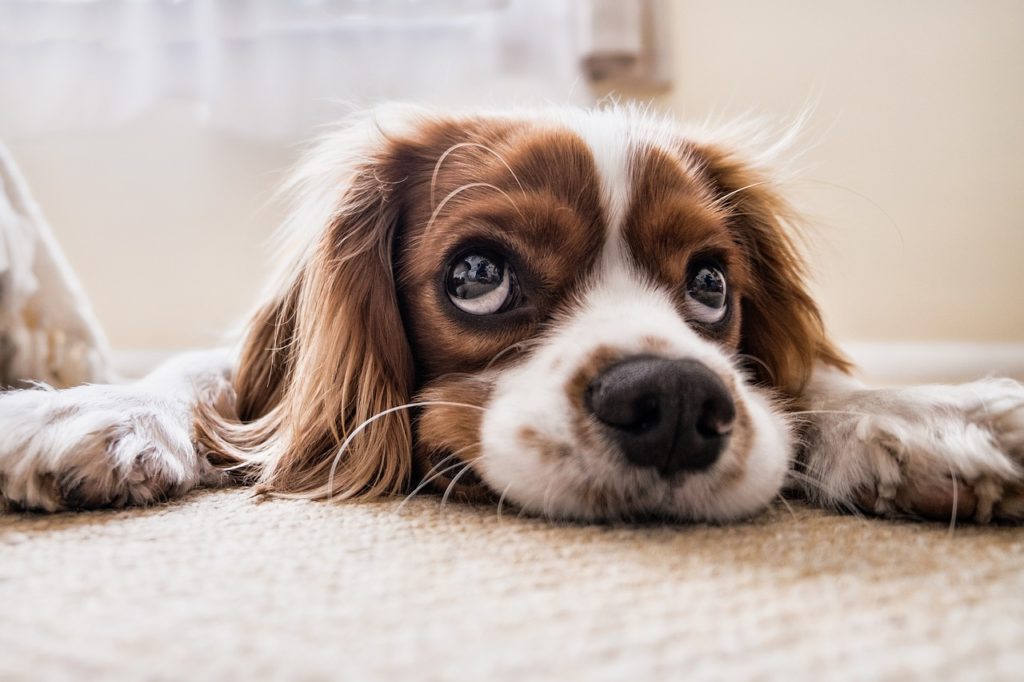
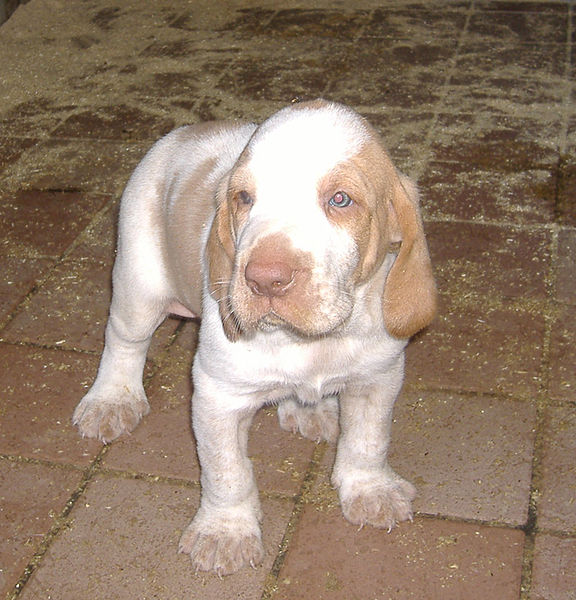
Puppy of Bracco italiano
Do not let your dog roam about alone without monitoring it. It could be mistakenly shot at by a hunter or be stolen. If you live in a place where there are poisonous snakes, you can keep anti-venom. Which must be changed yearly and stored in the refrigerator.
Many insurance companies offer health insurance for pets, so seek out the one that suits you and your pet. It is advised that you have a 3rd-party insurance should your dog cause an accident or bite someone.

Friday, May 10, 2019

7 TRIPS YOU SHOULD KNOW BEFORE DRIVING IN ITALY

The Italian autostrada, major highways, can be a daunting experience. Also, with the general perception of Italian driving and the fact that the country is equipped with a great train system, most tourists don’t even consider to rent a car. We’re here to say, have no fear! The following are all you need to know to understand driving in Italy. So, if you’re considering renting a car, keep reading.
FUEL
The most important thing when driving is, of course, fuel. The stations on the autostrada are mostly self-service and allow you to pay with a credit card. Some that have been updated may ask for a PIN number, so it’s safer to have a debit card ready if your credit card does not have a PIN. Filling up the tank is a pretty easy task so don’t be too worried about this part, it’s similar to self-service gas stations in other countries. The majority are but some stations are also not self-service. Be mindful that Italy uses the metric system, so your gas prices are measured in liters. Also, on the autostrada, gas prices are a minimum of 15–20% more expensive than others off this these particular highway roads.
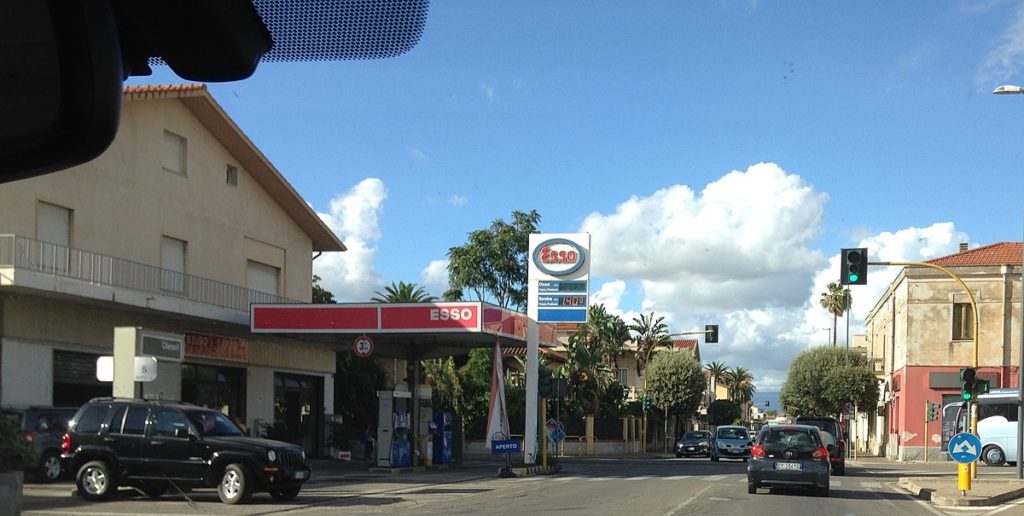
Italian station service *

REST STOPS

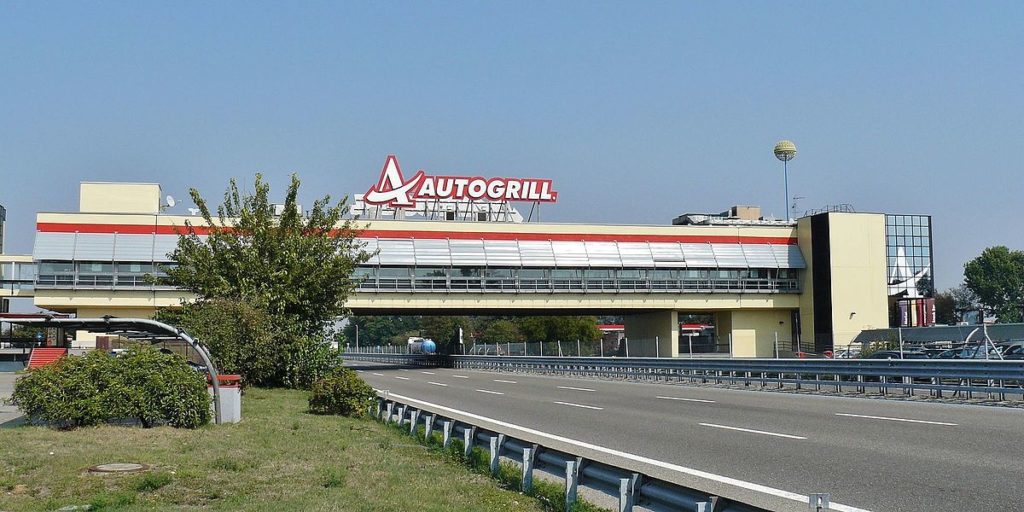
This article wouldn’t be able Italy if it didn’t mention food! Going along with the typical perception of Italians and their food, even the rest stops have delicious treats. Sandwiches, coffee, and all your basics, even small trinkets are available at the Autogrill. A restroom and gas station is also available here. You may be surprised that you end up looking forward to these stops along your journey.
Italian motorway Autogrill *
SPEED
As you knoe, it’s a pretty common stereotype that Italians drive very fast. While there may be some truth to the craziness of some drivers, it’s true of anywhere. And speed is actually monitored fairly well on the autostrada.
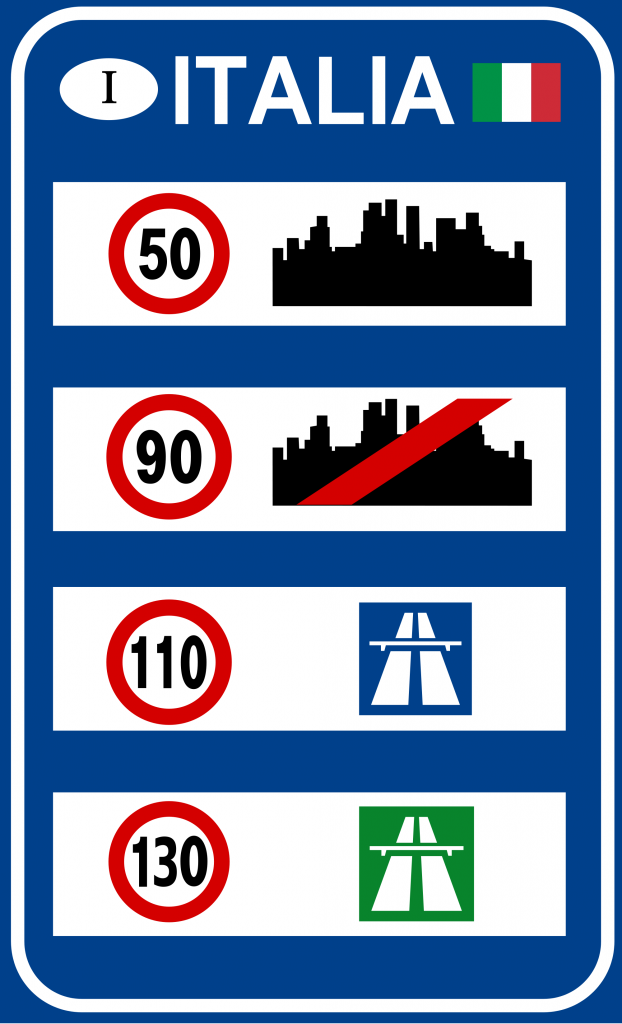
Italian generic speed limits
Speed cameras line the highways and tickets are sent automatically to car owners. If you are renting a car, the agency will not only charge you for the speeding ticket but add an additional fee for processing each one. Speed limits are displayed on circular white signs with a red outline and the numbers in big black type.


Tuesday, May 7, 2019

ITALY’S TRAIN SYSTEM AND TICKET OPTIONS (TRAIN GUIDES)

LOCAL TRAIN SYSTEM OF ITALY
Traveling around Italy is really simple using the train system, whether it’s the national or private train service. You have plenty of options, dates, times, and they’re very easy to buy in advance or at the time of travel. However, you usually cannot buy more than 4 months or less before. So don’t be alarmed if you’re searching and cannot see something so far in advance.
Regional trains in Italy are usually the least expensive and don’t need to be booked ahead of time. They aren’t cheaper when you buy in advance and you can purchase them at a machine kiosk at every train station. If you don’t see a machine at the station, be sure to find a train worker as your enter the train to explain and buy your ticket directly. If you are caught without a ticket, you will be fined. So just let them know and they will allow you to purchase directly onboard. You may see some terms or abbreviations when searching for regional trains such as interegionale (IR), diretto (D), espresso (E).
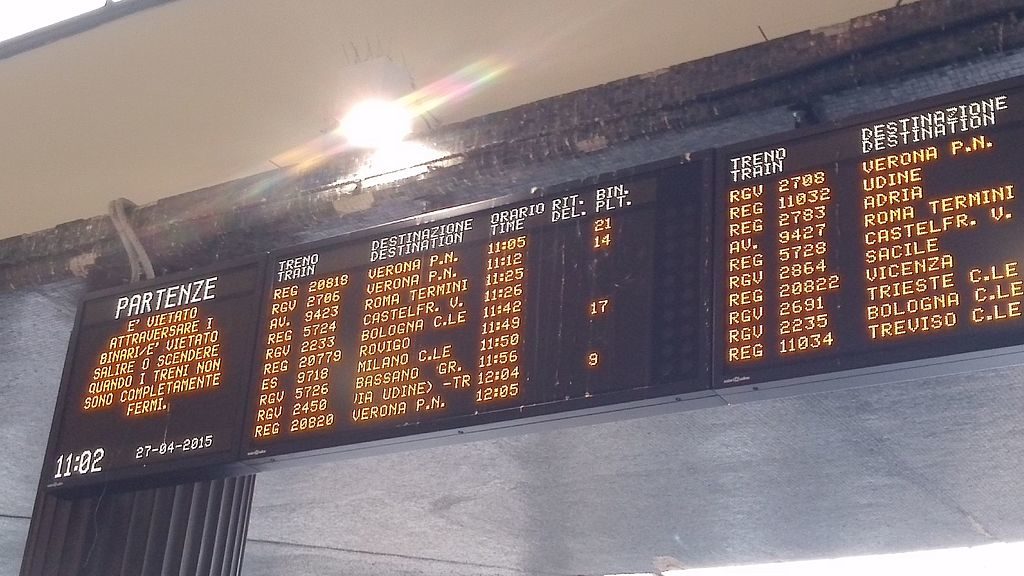
Train information in Italy *
If you see regionale veloce (fast regional), this is the train that will make less stops along the way but typically regional trains stop at every station. On these trains there is no reserved seating so spending a little extra for first class may be worth it. If you have a long way and are traveling with suitcases since first class can be less crowded. If you decide not to buy in advance, make sure to validate your ticket before entering the train. There are small yellow machines typically at every platform to insert the ticket. It will be stamped with the time and date. This step is very important because if you do not validate your ticket, you can also be fined!
TrenItalia is the national train site of Italy. It’s simple to use and you are able to change the language to English. Here you can register as a member of buy as a guest; there’s no need to create an account when buying. To search for options, you can choose round-trip or one-way, and simply enter the departing and destination cities. If You have the ability to pay with a credit card, debit card, or PayPal then you will get your PDF via Email, Once you purchase your tickets online. You can print them or simply show the PDF to the ticket checker as they come by on the train. Be sure, if you don’t have WiFi, to download the PDF beforehand and save it in a safe place on your phone.
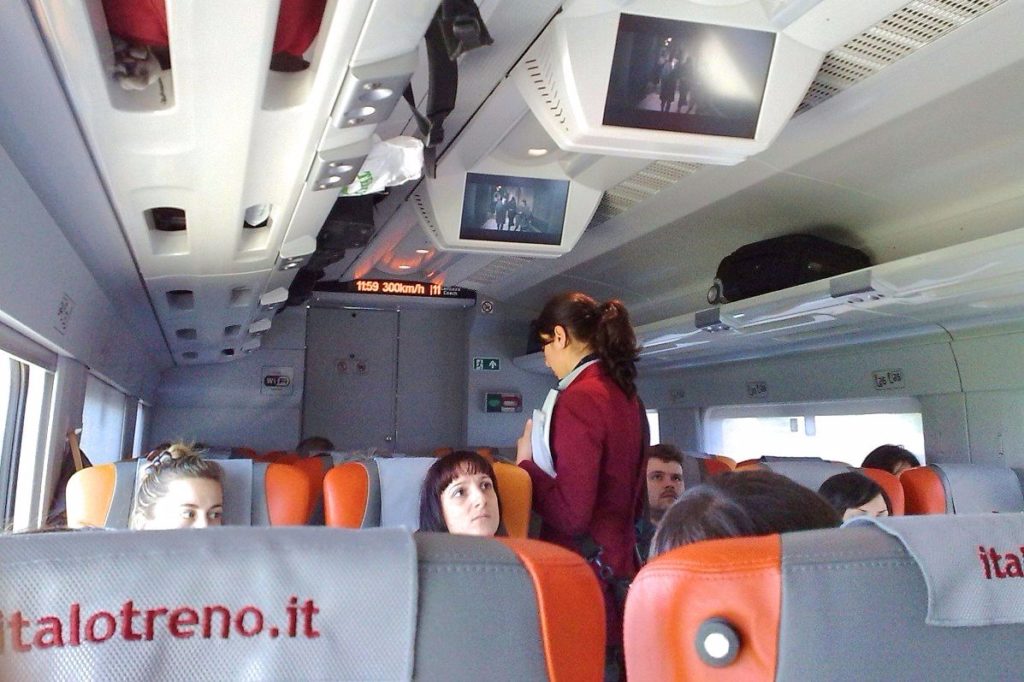
Italo train *
Italo is the private train company in Italy. Their trains are usually newer and much nicer than the other options also depending on the class variation that you choose. This might be best to use for long journeys which is typically what they offer.

Thursday, May 2, 2019

LE MARCHE PROPERTY, SEARCHING TO BUY IN CENTRAL ITALY

PROPERTY IN LE MARCHE

If you are searching to buy a property in central Italy, you’ve probaby considerered the two regions Umbria and Tuscany. However, Le Marche property is a less expensive option that can be absolutely beautiful also.
This region offers a combination of mountainous terrain, rolling hills, countryside plains, and the sea.
For price estimates of properties, you can easily find the information you are looking for on Italy’s main real estate sites: Osservatorio di Immobiliare. Also, click here for prices in this specific area.
Buying or renting in this region is a great steal considering the prices here are the lowest in central Italy yet you don’t sacrifice anything.
With a Le Marche property, you have access to all the magic of this part of the peninsula at a much cheaper price.
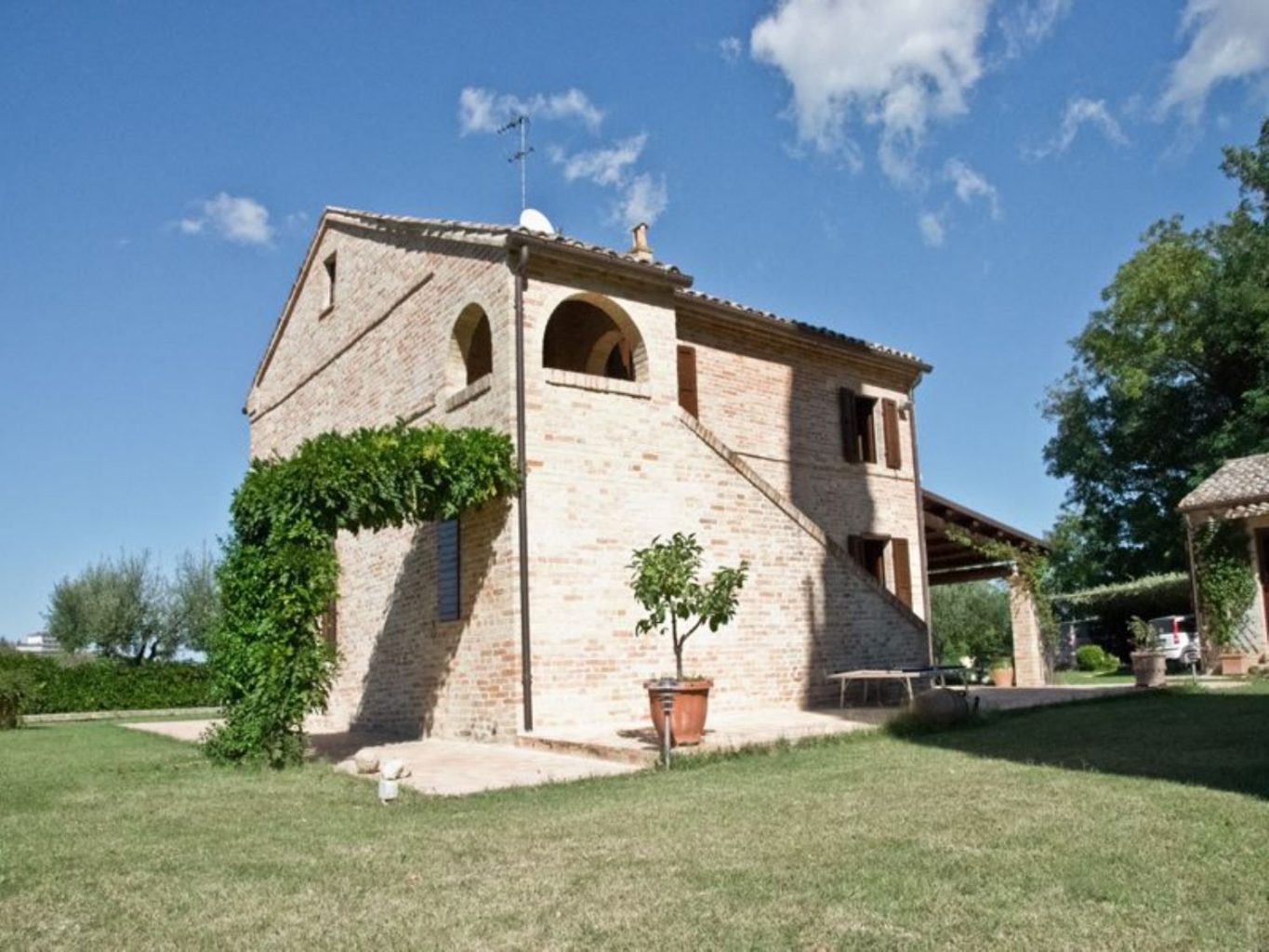
Country House Le Marche Property, Italy

Le Marche Property Pricing

From prices recorded in January of 2017 and 2018, the average cost of property dropped 4%. They went from about €1.853/sq.m. to €1.774/sq.m.
Since the last official calculation, the prices have continued to drop significantly. Also, countryside homes are even less than these recorded averages.
As a result, they could cost as little as €900/sq.m. City apartments are more expensive and bring up the overall average of prices of Le Marche property.
Additionally, if you are looking to buy property here in Italy, it’s important to familiarize yourself with certain terminology. Homes of different types may not be the same as you are used to.
Therefore, begin your search with the right keywords. In the section, “property types” below, we have compiled a list of the property types. These are most likely the names you will see and what you can expect.

Property Types

  • Attico or Mansarda = Attic
  • Loft or Open space = Loft
  • Appartamento = Apartment / Flat
  • Villetta a schiera = Townhouse
  • Casa indipendente = Independent Home
  • Rustic or Casale = Country-style Home / Farmhouse
  • Villa = Villa
  • Palazzo or Stabile = Building / Mansion

Wednesday, May 1, 2019

REAL ESTATE BUYING GUIDE IN ITALY

The process of buying a property can seem daunting enough in your home country. But fear not, it’s not so difficult and the process in Italy is very similar to those of other countries.
Due to reading this article, you’re one step closer to the Italian home of your dreams and hopefully will come away from it with less fear and more enthusiasm.
If you haven’t considered the idea of purchasing property in Italy, we hope to get you thinking after discovering how simple it can really be.
Going through Real Estate Agents in Italy is a safe process. Due to a law passed requiring strict selections of exams to be registered at the Chamber of Commerce.
Every agent must be registered and therefore must take and pass the exams. This guide applies to off-plan and resale properties.

OFFERTA; PURCHASE OFFER

The Real Estate Agent will assist in presenting a formal offer to the seller of the property. It is written up in Italian and English along with a down payment/deposit of 10%–20% of the purchase price.
Therefore, this payment legally binds the sale if the offer is accepted by the seller. This is the caparra confirmatoria.
If either the buyer or seller would like to negate the sale, one of the parties involved can claim damages to the property and return the down payment.
If the seller backs out, the buyer may be eligible for a refund with additional fees paid by the seller.

COMPROMESSO; PRILIMINARY CONTRACT

This is the phase which consists of all the details that will be outlined during the sale. At this step, all questions about the sale are answered.
All information is written in a preliminary contract if the seller accepts the offer.
Interior of italian home photo *
The final purchase price and conditions of sale are in this contract. Also, it will include a detailed description of the property along with any allotted permissions or planning and cadastral details.
The contract is signed when the caparra confirmatoria is paid. Also, paid to the Real Estate Agent is the commission fee, or provvigione.

ATTO NOTARILE / ROGITO; DEED OF SALE

The deed of sale must be signed and transferred in the presence of a Notary, or Notaio. The only individual during this process with the legal authority to transfer properties in Italy from one person or entity to another.
The buyer is responsible for hiring and paying the Notary. However, this person should be completely unbiased, independent, official of the public, responsible for ensuring the legality of all documentation during the sale.
This is obviously the most important step so we recommend finding an English speaking Notary. This makes it more comfortable and easy to understand everything during the process.
You may also ask detailed questions and ensure clear, transparent answers, without miscommunications.
We also recommend using a bank account to do the transfers and handling everything with a digital paper trail.

FINAL SEE & PAPERWORK

Within 3 months of the deed of sale completion, a copy of the paperwork should be available. This is 3 months after the Notary process completion and official purchase date.

REAL ESTATE & TAXES

Additional costs and taxes are paid. €150 is paid to the Notary from 3 small taxes. The government also values the property in order to impose certain taxes. This is the valore catastale.
If the buyer moves to Italy and applies for residence within 18 months of the sale, the registration tax or stamp duty, known in Italian as imposta di registro, is 2%–4% of the valore catastale.
Also, the tax goes up to 9% if the purchase is for a holiday home or investment property. This is without the buyers attempt at residence in Italy.
Additionally, 20% of earnings is payable as capital gain if it’s bought and sold within 5 years of the purchase.
Whatever the difference, if positive, in which the buyer sells the property for, 20% of that must be paid.
Interior of italian home photo *
If this property is an investment with the intention to rent it for additional income, this income is subject to tax by the Italian government.
Each year, the property owner must report the income amount made through this property with appropriate deductions (repairs, expenses, and local taxes paid). Authorities tax this income.
And it’s also reported in the buyer’s country of residence with a double taxation agreement. This will ensure the buyer only needs to pay the taxes on this income once.
Local taxes also factor in property ownership. The IMU or TASI property tax, or imposta municipale sugli immobili, is a 0.7%–1% local council tax.
Local government decides the percentage payable per year. This is in two payments, December and June.

Thursday, April 25, 2019

WHERE TO EAT IN ITALY?

When talking about summer holidays, everyone should visit Italy; if not every year, at least once in a lifetime! Why? In addition to the fact that the magical cities of Siena, Rome, Tuscany, Venice, and Florence are undeniably beautiful to vacation year round, the atmospheric condition and sumptuous heat of the summer add to the exceptional and amazing characteristics of Italy.
Seasoned tourists know that one of the best ways to enjoy every bit of what a place has to offer is to engross themselves in the cultural activities and zeitgeist of the place. Also, it’s easy to forget yourself completely in an Italian dish and if there’s one thing to recommend doing in Italy, it’s enjoying the cuisine! You can hardly walk past the countless doorways of one street of an Italy town or city without salivating over the aromas of foods coming from different angles.
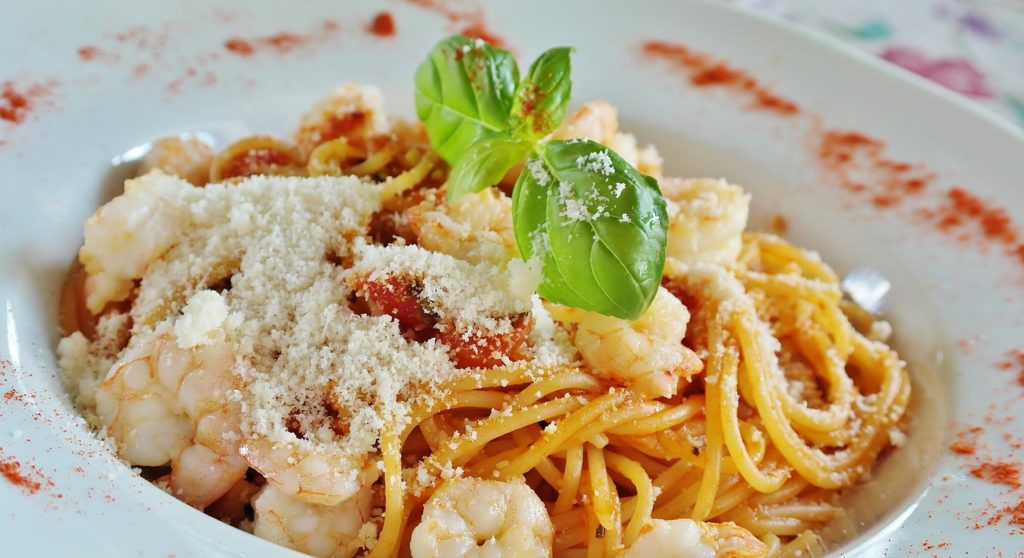
italian spaghetti
*
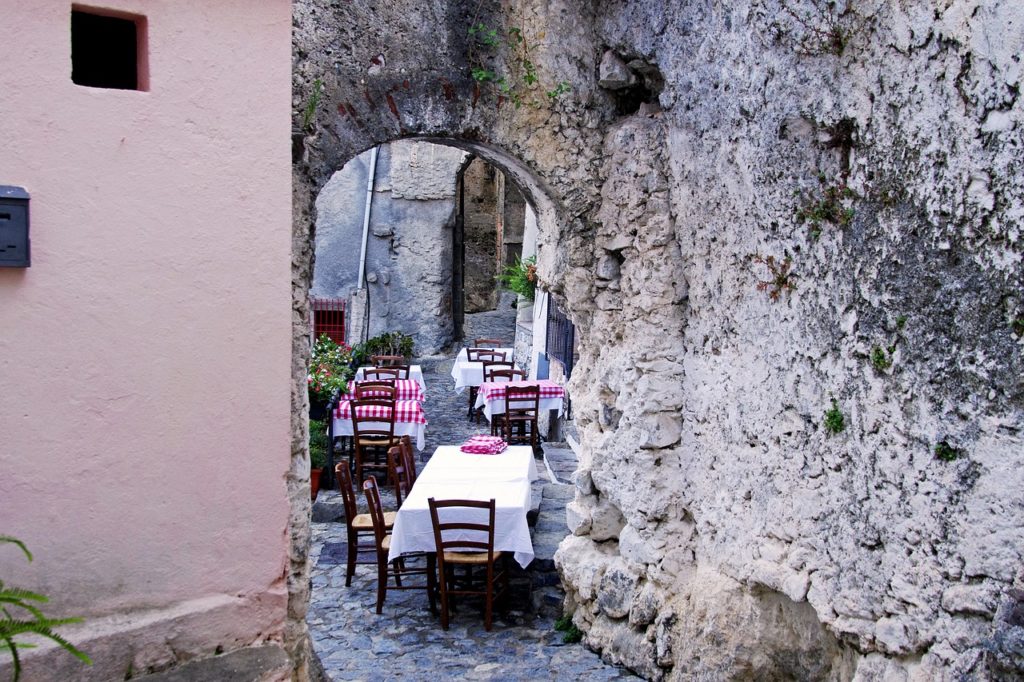
If you have never heard of the phrase “sotto casa”, which literally means under my house, visiting Italy will give you the opportunity to hear it again and again. Ristorante sotto casa is the community eatery, which can be easily found down the road. It is not uncommon for tourists to have more trust in restaurants recommended to them by food bloggers and travel websites. These websites, however, often tend to forget including local eateries to their lists. The truth though, is that you will may be missing an even better deal and meal if you don’t take the chance to visit these local restaurants.
Osteria in Italy
*
Trust your gut and select a restaurant based on the atmosphere! If you happen to wonder or stroll through the square, you cannot help but perceive the sweet aroma of tomatoes and garlic that’s diffused through the thin air. Just trust your instinct. Sit and when the waiter comes by, place your order or, if you’re feeling spontaneous, ask him to recommend a dish for you. Eat like Italians! Enjoy your meal slowly and people watch. If there’s one thing Italians don’t rush, it’s their valuable time to eat.
Do not twist things up with the impression that a meal should be prepared with elaborated ingredients before it can look presentable and be delicious. In Italy the best of dishes can be achieved with the most basic of ingredients. This also means you may not have to spend a fortune to enjoy sumptuous meals.
Trattoria Aldente
Trattoria *
To avoid falling into traps regarding purchasing overly priced meals in Italy, simply keep in mind the following clues when deciding on the restaurant.
° Don’t visit eateries filled with gimmicks. For example, some restaurants display foods through the window with combo deals like free soda and pizza, a restaurant employee may stand outside to give flyers to passersby – do not fall for such “cheap” deals, meals in those places may actually be very expensive!
° Avoid eating too close to the tourist attractions. Restaurants located at tourist spots or extremely close to the centers of tourism, like the St. Peter’s Basilica or the Colosseum tend to charge more because they can; the demand is always high. However, many less expensive and even more delicious options can be found venturing just a few streets away!
° Do not eat at Italian restaurants that don’t have Italian dishes on their menus. A restaurant that has only or mostly English meals on its menu is basically set to treat tourists visiting who may not have an appetite for foreign food yet and will want to stick with what they are used to. Eating at such restaurants is sure to hurt your wallet!
Note: Gratuity is not common in Italy. Many waiters receive good pay and other governmental benefits like paid holidays and health benefits. It is therefore not uncommon for fancy sit-down restaurants to charge you a token that would cover for bread and water before meal, known as il coperto and 10% – 15 % service charge, known as servizio incluso. So, if you have received outstanding services, you are advised to drop a Euro or 2 on the table. Better still, watch what the locals do and follow their step.
Italian Ice Cream
Italian Ice Cream *
Enjoy your stay in Italy by having a gelato every day. Your summer vacation to Italy will not be complete without consuming the unique, national frozen dessert over and over again. Yes, ice cream is in every country and you must also eat it at home, but the special Italian ice cream, you will not want to miss it!

Monday, April 22, 2019

ITALY DIFFERENT ACCOMODATION

WHERE TO SLEEP IN ITALY

Planning to visit Italy? You obviously must have your to-do-list by now and on the list will be an item related to accommodation. After all, you will not be sleeping outside or on the street when you get there! Although, some travelers believe finding accommodation when you get to your destination allows more flexibility. It wouldn’t be a bad idea to book beforehand. This way you can avoid the stress of securing a place when you arrive, especially in the late hours. Whichever way you have decide to make it happen, you should become familiar with some of Italy’s different accommodation terms.
Lodging is pretty standard in Italy, as you would expect. However, while many terms are familiar or in English, there is some words in Italian that you may have never seen before.

HOSTEL

Right from the earliest days, hostels were constructed in the dormitory style and were only occupied by young people. However, in the modern world we live in today, age restriction has been taken off hostels, meaning people of any age can now occupy hostels because they are now constructed for private room/facility options. You can even find some suites with baths and more luxurious amenities, although they’ll definitely cost you.
In Italy, the use of the term “hostel” isn’t always used, even if, in fact, the place is a hostel. Some are described as a guesthouse or hotel. Nonetheless, a hostel can easily be spotted by its price. If the price of an advertised accommodation is quite cheap or is said to have dormitory-styled rooms, then it is probably a hostel or low star hotel. The equivalent word for a hostel in Italy is ostello and it is pronounced as aw|STEL|oh.

bed and breakfast in Italy
bed and breakfast in Italy *

HOTEL

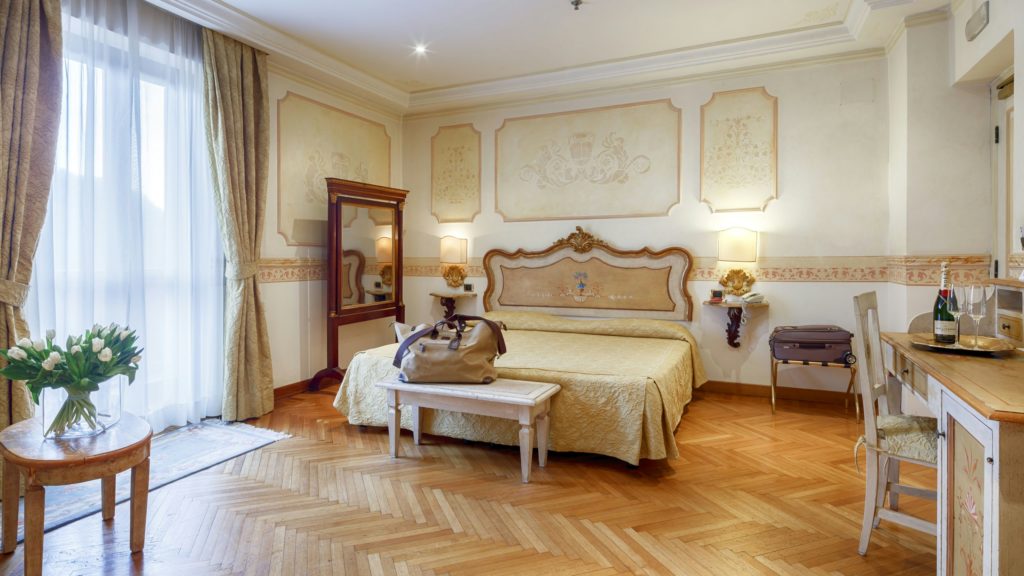
Yes, it is what it sounds like – a hotel. However, in the Italian language, it is pronounced without the H, so it goes like OH|tel. In Italy, a star system, which might not be the same as the start ratings used in other places, is used for hotels.
Like many other places, the facilities presented by each hotel may vary. While some will have many of the amenities found in world class hotels, like elevators, some may not have. The star system with which a hotel is rated is what gives an idea of what amenities it has. The facilities in a hotel may also depend on its age. Therefore, to get information about where to sleep in Italy, we suggest you read the descriptions fully either on the booking website or, if it has one, the hotel’s website. This is the Italian word for hotel, it is pronounced as al|BER|go. Refer back to Hotel – the same applies here.

Hotel in Rome
Hotel in Rome *

B&B (BED AND BREAKFAST)

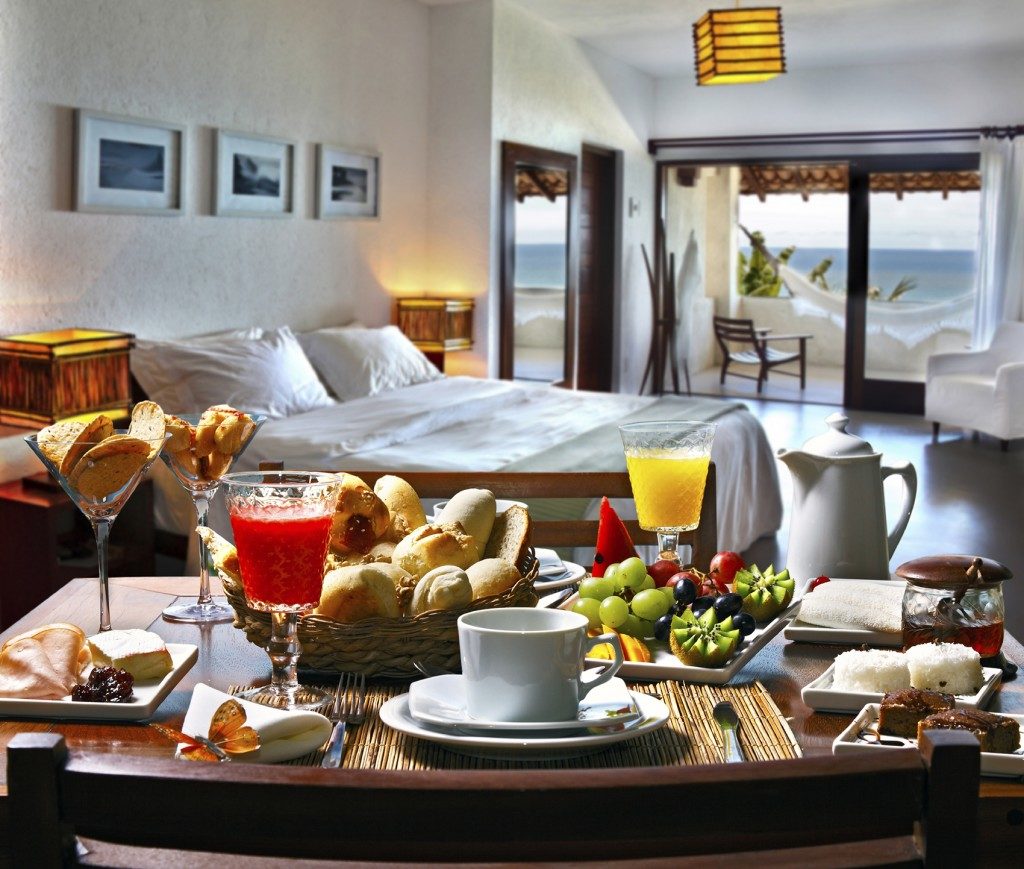
If bed and breakfast were to be translated into the Italian language, different letters will definitely make up that phrase. However, in Italy, the acronym “B&B” is often used. Since Italians are not really into the breakfast culture, you may not see the full continental breakfast you are used to. Instead, what may constitute as breakfast in your B&B may be a fridge stocked with items like yogurt, fruit and items for making coffee. It also may provide a simple buffet however, Italian breakfast is typically a cappuccino and a croissant. So don’t be surprised if you don’t find bagels, bacon, and an omelette bar.

AGRITURISMO

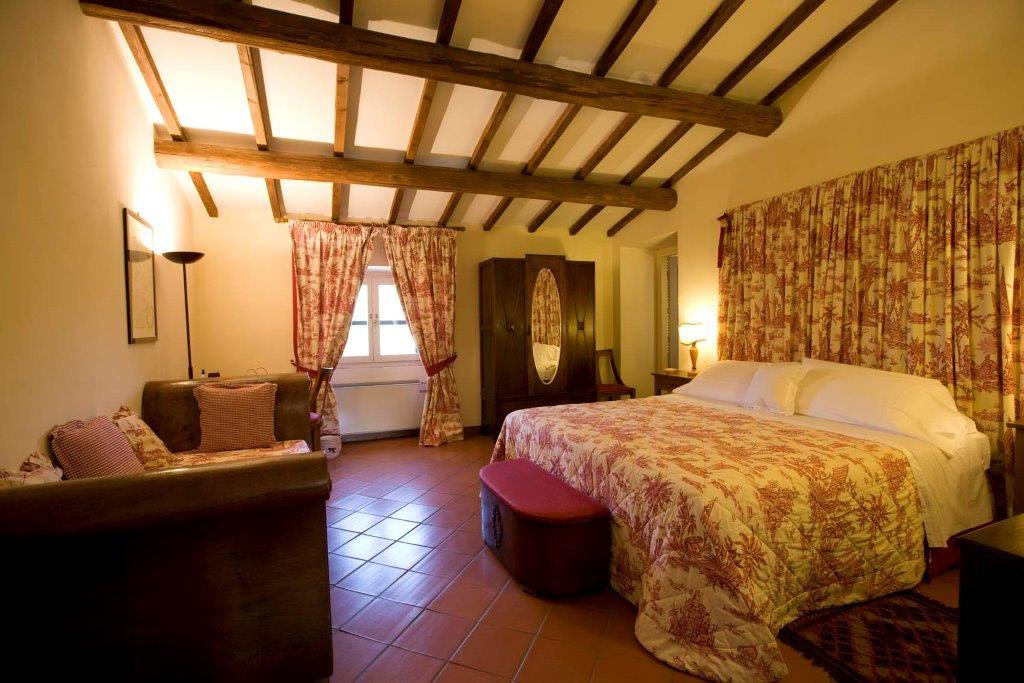
Agriturismo would literally translate to mean “farm holiday”. While the actual meaning of an agriturismo may not be fully grasped in English. It is another accommodation option in Italy, where there is a bed and a breakfast on what appears to be a working farm. Don’t worry, they’re not expecting any farming from you. So you won’t need to brush up on your milking technique in order to enjoy your cereal.
Grabbing this type depends on the farms available in the area but in general, this is a popular accommodation type in Italy. It may include cooking classes or outdoor activities and at least a meal or more will be included. Agriturismi (the plural form of the word) are usually situated outside the cities and getting there without a means of transportation, like a car may be a bit difficult. At times, you may find an agriturismo on the listing of a hostel because it’s either less expensive or rustic.

Agriturismo room in Tuscany
Agriturismo room in Tuscany *

CONVENTS AND MONASTERIES

Throughout history, convents and monasteries served as hostels for travelers and that tradition is still in practice today. Although they have been enhanced to more comfortably accommodate all your needs. While not every convent and monastery welcome tourists as guests, the ones that do typically gave inexpensive beds. There may also be curfews, whereby the doors will be locked after a particular time. In addition, a man and a woman, even if they are married, will not be allowed to stay inside the same apartment. There are separate quarters for men and women. While some of the restrictions may seem inconvenient, don’t rule them out. Especially if you’re not staying for a long period of time. If you’re traveling alone, this could be a great option to ensure peace and quiet, safety, and will keep your wallet happy!

VACATION RENTAL APARTMENT RENTAL AND VILLA RENTAL

If you are planning on staying back in Italy for quite a number of days with family or friends, a vacation rental may be the accommodation for you! At times, they may be advertised as apartment or villa rentals. The bookings should include photos so be sure you look through a place thoroughly to be sure it matches what you need.
So to summarize, there are plenty of different types of accommodations in Italy. Whether you are single and traveling solo, married and traveling with your spouse/family, or with a large group of friends, you will have plenty of options. Check out the options to find the one that best suits your trip!

Thursday, April 18, 2019

FOOD ALLERGIES: A GUIDE TO ITALIAN TRAVEL

When you’re allergic to cats, it’s pretty simple to not go and pet one but food allergies are a bit more complicated. They are one of the most daunting travel complications but luckily, it’s easily avoidable with a few words or the right question. Obviously you’re going to Italy mainly to eat the delicious dishes so we suggest learning how to tell your waiter of your allergy in order to avoid ruining the best part of the vacation! He/she might not be aware of exactly what is in your meal so air on the side of caution so he can check with chef.

Writing your allergy down in Italian and English on paper or saving it in your phone is a great idea to avoid any miscommunication. You can never be too careful with food allergies.

ITALIAN FOOD ALLERGY  VOCABULARY

I am allergic… = Sono allergico…
to gluten = al glutine
to lactose = al lattosio
to soy = alla soia
to mussels = alle cozze
to prawns / shrimp = ai gamberi / gamberetti
to eggs = alle uova
to seafood = ai frutti di mare
to clams = alle vongole
to shellfish = ai crostacei
to nuts / walnuts = alle noci
to peanuts = alle arachidi
to hazelnuts = alle nocciole
to almonds = alle mandorle
If you can, check with a native speaker (maybe your hotel staff) to be sure that your sentence is written correctly and ask for the proper pronunciation. Depending on what you are speaking about, the form of “to” changes. If you don’t get this part right while speaking, don’t worry. People will still understand!
.
Of course it’s always good to be prepared for a slip up in the kitchen or cross contamination depending on the severity of your allergy so be sure to always bring your EpiPen(in italian “autoiniettore di adrenalina”)  or appropriate medicines. Plus, most pharmacists, doctors, and hospital staff know some basic English.